WASHINGTON—The United States Trade Representative announced early Saturday that Canada had declined to finalize a trade deal. The announcement triggered immediate 50 percent tariffs. It left both countries uncertain about what exactly had been on the table.
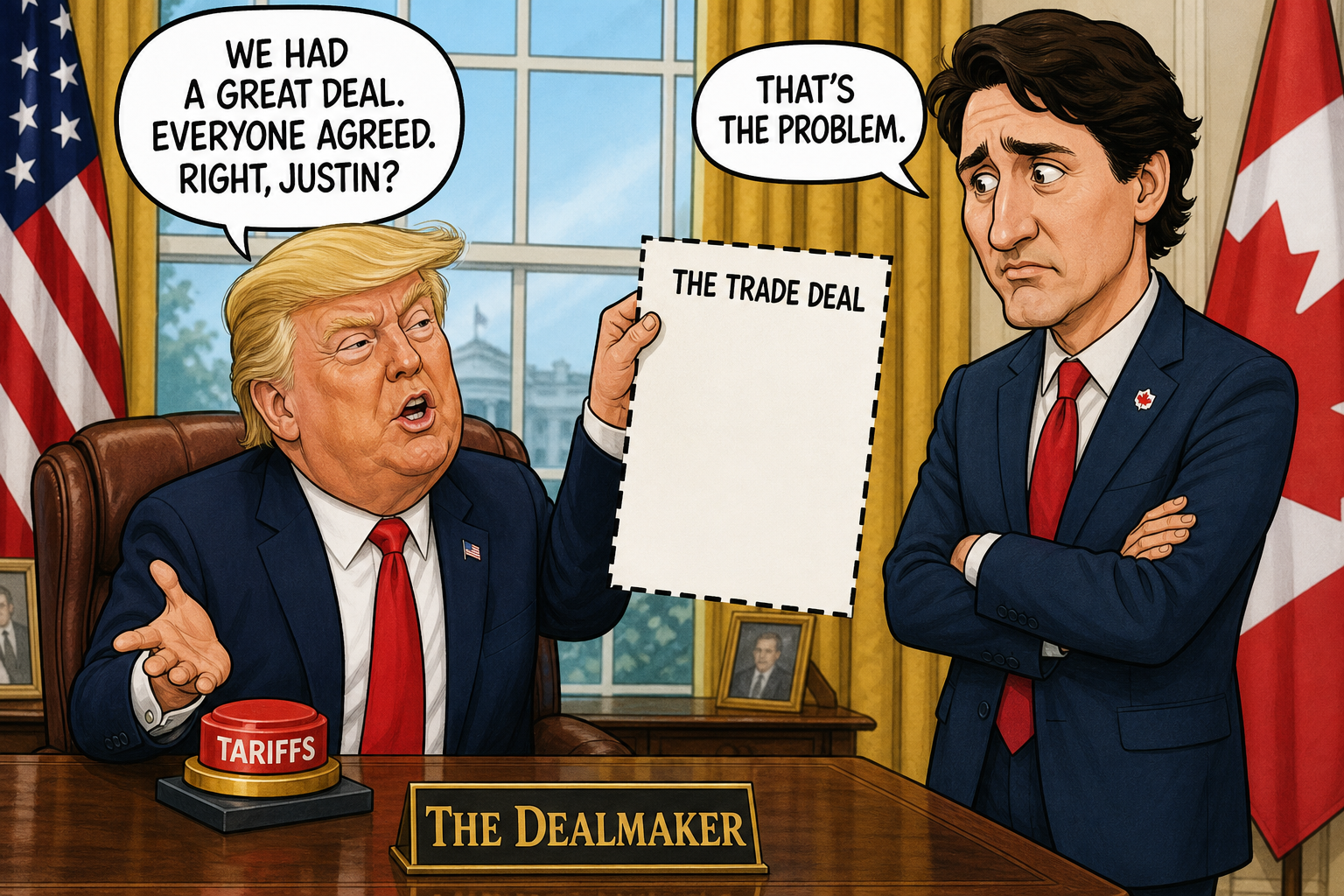
The deal, described hours earlier by Lumpy-Dumb-Dumb as "pretty much" complete, had no final text and no signatories. It also had no paper trail beyond a few sentences spoken near an airplane.
Trade Representative Jameson Greer said the refusal left the United States with no choice. "Canada declined to finalize the trade deal," Greer said. "The United States will impose 50 percent tariffs. This is a natural response to a party choosing not to be in a deal we already said was done." He added that the United States had offered Canada more favorable market access. No Canadian negotiator could locate that offer outside of Greer's statement.
Hours earlier, the president had told reporters the agreement was moving along. "I only make good deals," he said. "Much better deal for the United States." He did not say what the deal contained or whether anyone had written it down. A White House aide later explained that the arrangement was conceptual but binding, in the way a strong hunch is binding.
Prime Minister Mark Carney rejected the premise. "No deal is better than a bad deal," Carney said. "Canada will not be bullied. We will respond with swift retaliation." His office later confirmed that the retaliation would target American goods. It was still determining which goods had survived the last tariff dispute.
Canadian provincial leaders were less measured. Manitoba Premier Wab Kinew told a crowd that the United States was weak and that Canada should fight. "He is completely out of touch with the cost of living of Americans," Kinew said. "They are coming to us for a deal. I think we should fight." Kinew did not say what Canada would fight with. His office said strong eye contact and moral clarity were under consideration.
The timing compounded the confusion. The U.S. side said a deal was close. The Canadian side said it had received no final language. The bond market reportedly demanded kinder treatment from the White House. The president responded that the United States would not be pushed around by numbers, especially not the ones that make borrowing costs go up.
By midnight, the United States had imposed tariffs on Canada because Canada had declined to sign a deal the United States had announced, praised, and then failed to produce. The Trade Representative's office said a signed copy of the original framework would be released once staff located it. Staff said it was likely in the same place as the Mexico deal and the last coherent explanation of tariff policy.