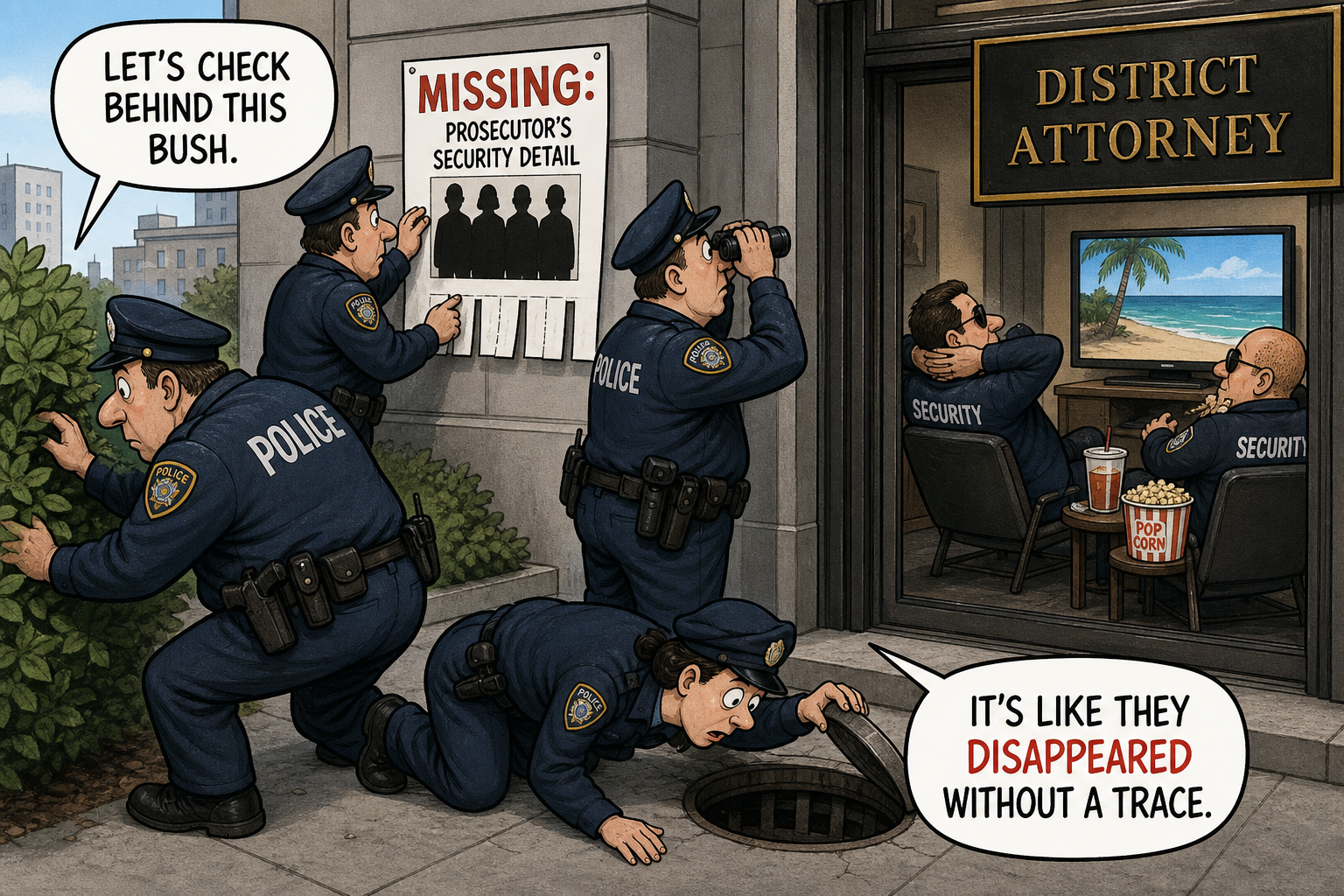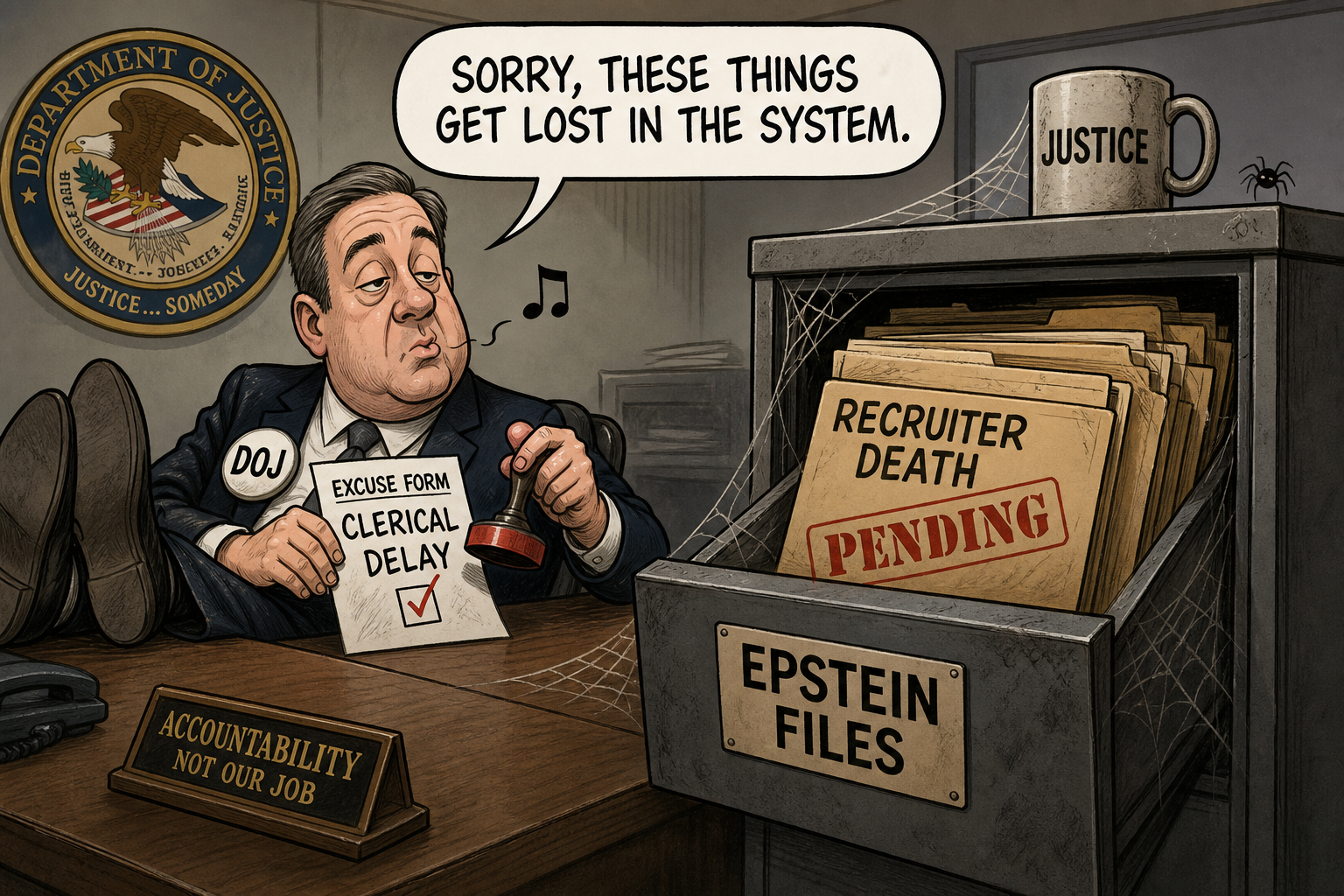
The Department of Justice confirmed Monday that its failure to release foreign records in the Jeffrey Epstein case was the result of a standard paperwork backlog. The announcement came hours after Epstein’s top international recruiter was discovered dead in his Paris apartment.
French authorities identified the man as Daniel Siad, a 53-year-old modeling scout. Siad had been under formal investigation for human trafficking and sexual assault. He was reportedly the key link between Epstein’s New York operation and a network of young women recruited overseas.
The DOJ has refused for months to turn over thousands of pages of documents held by foreign agencies. A spokesperson described the delay as regrettable but inevitable.
“We are aware of the incident and will process the request in the order it was received,” the spokesperson said. “There is no indication of foul play in the paperwork.”
Don the Con, who has faced extensive questions about his decades-long association with Epstein, did not comment. His legal team has previously argued that foreign documents were exempt from public release because they might “confuse the timeline” of presidential golf vacations.
Attorney Katie Phang, who has sued the DOJ for the Epstein files, said the department’s position sent a clear message. “The government is essentially confirming that its filing system is more important than a sex trafficking investigation,” Phang said. “That’s reassuring.”
The DOJ noted that the foreign records are still being individually retyped by a single temp worker assigned to the case last August. The worker, who is allowed one bathroom break per shift, has so far completed 62 pages out of an estimated 18,000. A supervisor praised the temp’s “diligence” and said additional toner cartridges were on order.
Meanwhile, French police reported no signs of forced entry in Siad’s residence. The only unusual detail, they said, was an empty filing cabinet near the body and a coffee mug bearing the seal of the U.S. Department of Justice.