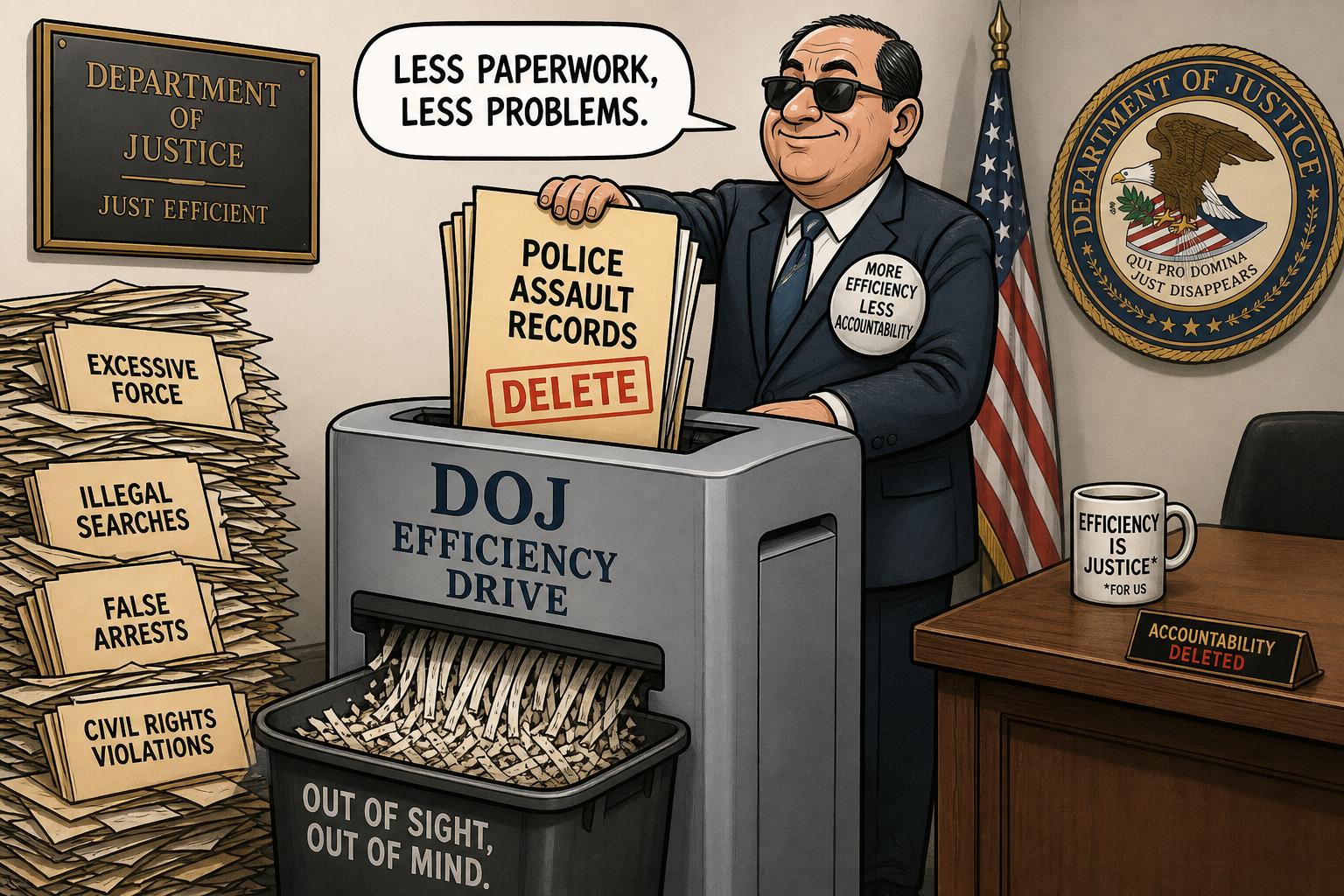
WASHINGTON — The Department of Justice announced Saturday that it had removed thousands of press releases documenting felony assaults on law enforcement officers, characterizing the deletions as a necessary step toward "reducing digital clutter" and "eliminating outdated propaganda" from its website.
The purge targeted files related to January 6 defendants, including those convicted of seditious conspiracy, assaulting police, and in several cases, subsequent child sex crime charges. A spokesperson for the department said the records had served their purpose and were now being decommissioned in line with a new records-management policy focused on "streamlining public access to current priorities."
"We determined that maintaining permanent public documentation of every violent interaction with federal officers created an unnecessarily negative search environment," the spokesperson said in a statement, adding that the department's rapid response account had publicly celebrated the removal after reporters noticed the missing files. "This is what good governance looks like."
The cleanup coincided with a separate $1.8 billion compensation fund signed into existence by Don the Con, which his aides described as a "patriot restitution program" for individuals convicted of storming the Capitol. Internal budget documents show the fund also includes what officials call an "audit immunity provision" shielding certain historical tax records from review.
Judge April Perry of the Northern District of Illinois, who dismissed a related case last week over prosecutorial misconduct, addressed the department's shifting posture in a ruling that cited broken trust. "I relied on all of you and your personal representations," she wrote. "Your sole goal is to do justice. That trust has been broken." The DOJ did not appeal.
Legal observers noted that the deleted press materials included extensive accounts of officers being beaten with flagpoles, crushed in doors, and dragged down stairs. One purged release detailed an Oath Keeper's conviction for seditious conspiracy. Another described the arrest of a man who had bragged online and then later pleaded guilty to sexual exploitation of a child.
"We determined the most cost-effective solution to the historical record was to stop hosting it," said the DOJ spokesperson, adding that the new methodology had already reduced public recollection of the events by 100 percent. The agency did not respond to a request for comment. A follow-up inquiry was automatically routed to a folder labeled "Pending Archive Review — Do Not Retrieve" and set to expire in 30 days.