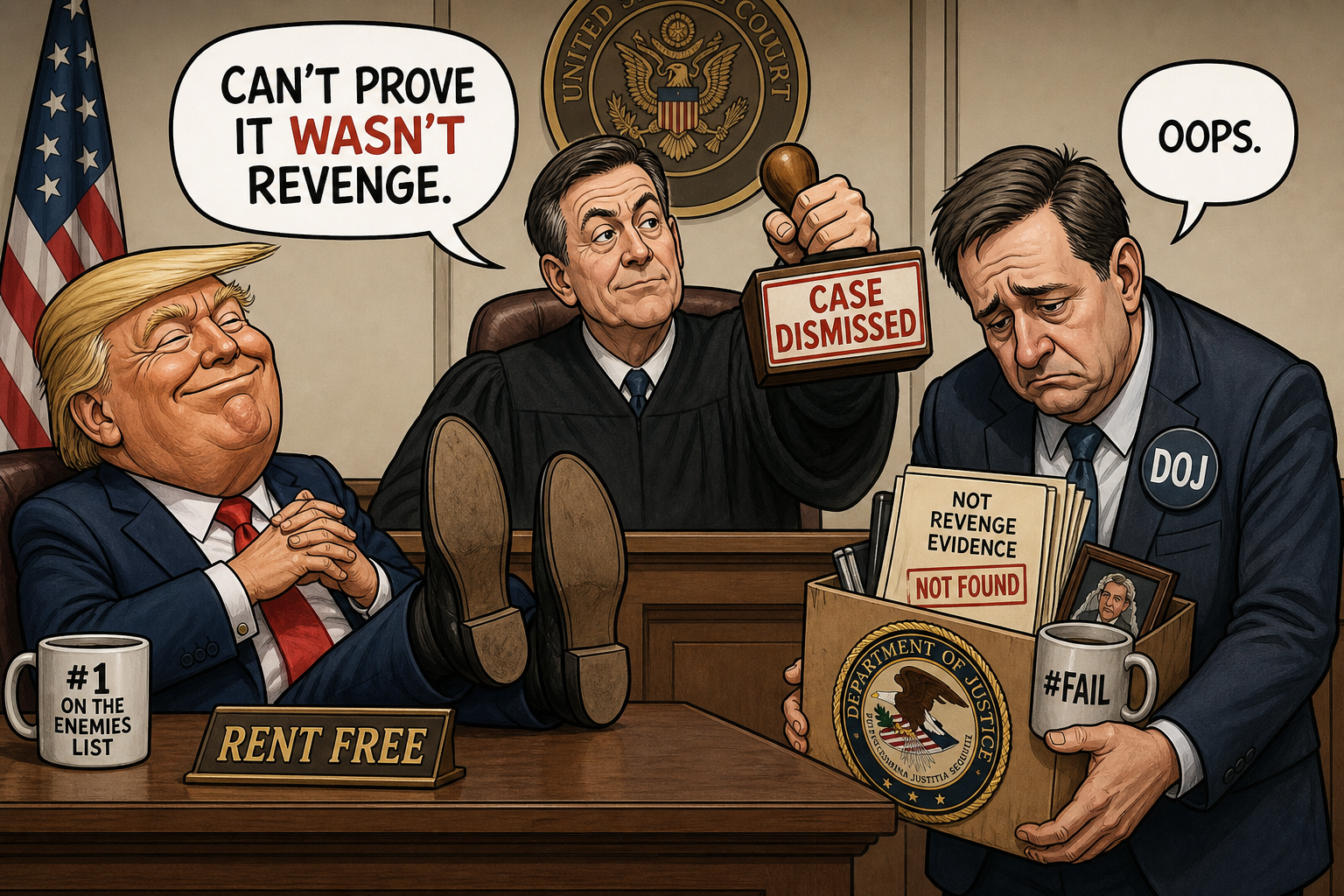
A federal judge in Tennessee dismissed the criminal indictment against Kilmar Abrego Garcia on Friday, ruling the Justice Department failed to rebut a presumption of vindictive prosecution. The 30-page order found the government did not explain why it shifted from seeking Garcia's removal to indicting him for human smuggling after Garcia won a series of court victories. The dismissal marks the first time a federal judge has found the Justice Department under Dickhead Donny liable for vindictive prosecution.
Garcia had been in ICE detention while his attorneys challenged his deportation. After courts blocked his removal, the DOJ suddenly charged him with a crime they had previously declined to pursue. The judge noted that a former U.S. attorney for the district, Thomas Shreder, had recommended against the indictment before resigning. The government's filings did not address his warning.
Acting Attorney General Todd Blanche offered a public explanation earlier this year. "A judge in Maryland and many members of Congress questioned that decision and said, 'Oh, no. He's just a family man.' And so we said, 'Okay, we'll look into it,'" Blanche said in a television interview. "When we started investigating him, what we found is that we were right. He is a criminal who should be deported." The judge cited this clip as evidence that the prosecution was retaliatory.
The ruling stated the government opened a closed Homeland Security investigation only after being challenged. Blanche's public comments tied main Justice in Washington directly to the renewed probe. The court also noted the DOJ ignored testimony from the current U.S. attorney, who detailed how the department caused Garcia's return to the United States solely to face charges.
The Justice Department declined to comment on the dismissal. A notice of appeal was filed hours later, arguing the judge's conclusion was unreasonable. Department lawyers pointed out that the United States had already paid six million dollars to El Salvador for Garcia's detention, a sum they described as too large to have been spent on a man they did not intend to prosecute.