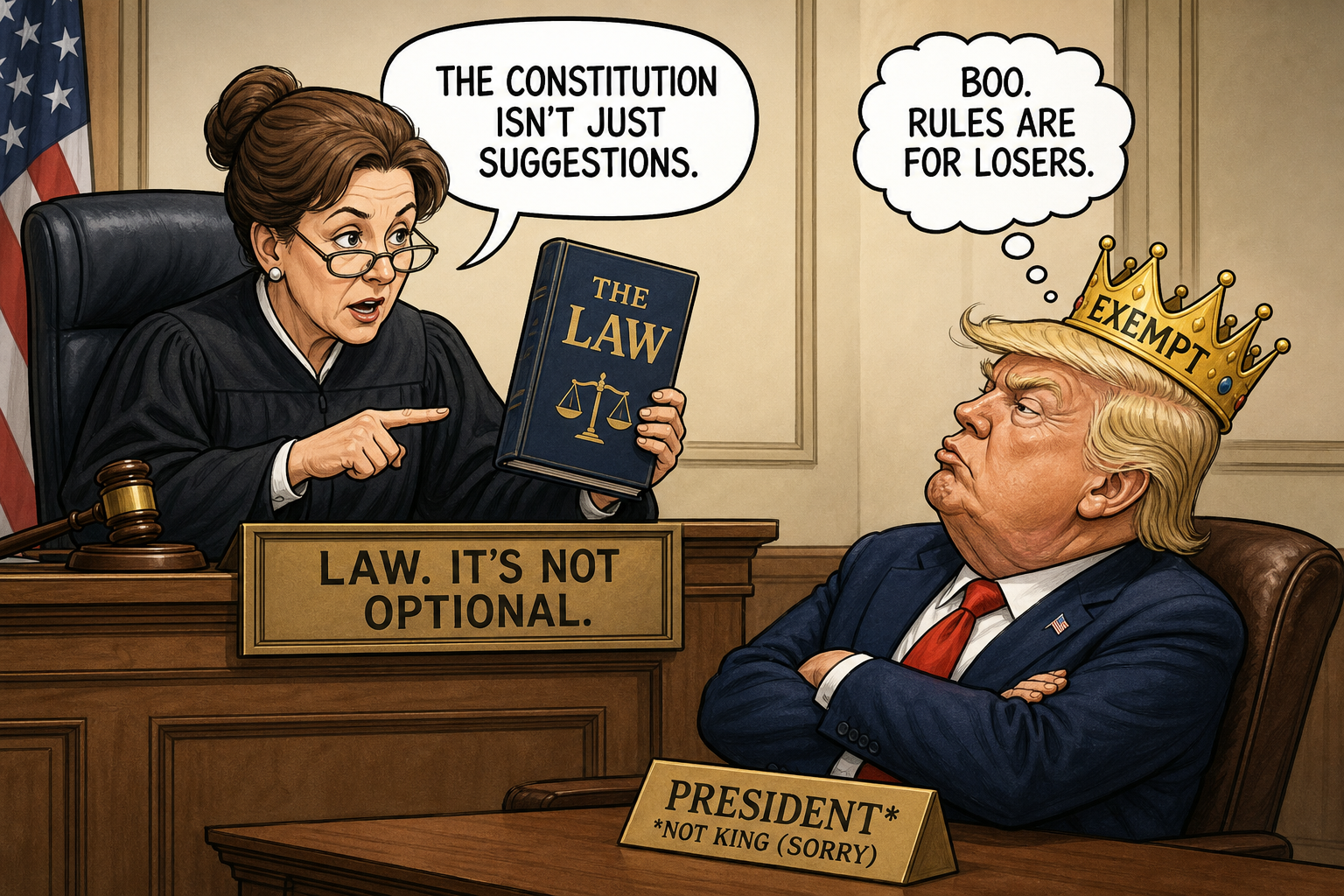
The Rusted-Out Fuck-Trumpet administration's plan to delete all of its emails and text messages hit a wall Monday when a federal judge pointed out that destroying presidential records is illegal. Judge John Bates, appointed by George W. Bush, ruled that the Presidential Records Act is constitutional. He said the executive branch cannot just ignore it. The ruling interrupted an internal White House memo that had declared the 1978 law an unconstitutional burden on the presidency.
The memo argued the administration did not have to preserve any communications. It said records of official business could be treated as personal property. That position was news to the courts, Congress, and anyone who owns a shredder. Administration officials had already moved many discussions to encrypted apps. They had started deleting Signal chats and text messages that dealt with executive branch work. The plan was to leave no trace of daily decision-making.
Judge Bates wrote that the law exists to maintain public trust. He said it shines light on what the president and his aides actually do. He quoted George Orwell and dropped a Shakespeare reference. The opinion noted that no court had ever found the act invalid. The judge seemed surprised anyone would think otherwise. "The Constitution assigns the president duties, not options," he wrote.
White House press secretary Harrison Fields responded calmly. "The executive branch maintains the right to interpret its own record-keeping obligations," he said. He added that the administration was "disappointed" a Bush appointee failed to recognize the memo's legal reasoning. He did not explain why the administration had not challenged the law through normal channels. He also did not explain why the memo was written in 18-point Comic Sans.
The Department of Justice said it would appeal the ruling. In the meantime, all document deletion is on hold. The National Archives confirmed it had received no records from encrypted White House chats. A follow-up request was referred to a working group that will study whether requiring presidents to follow the law imposes an undue burden on executive time.