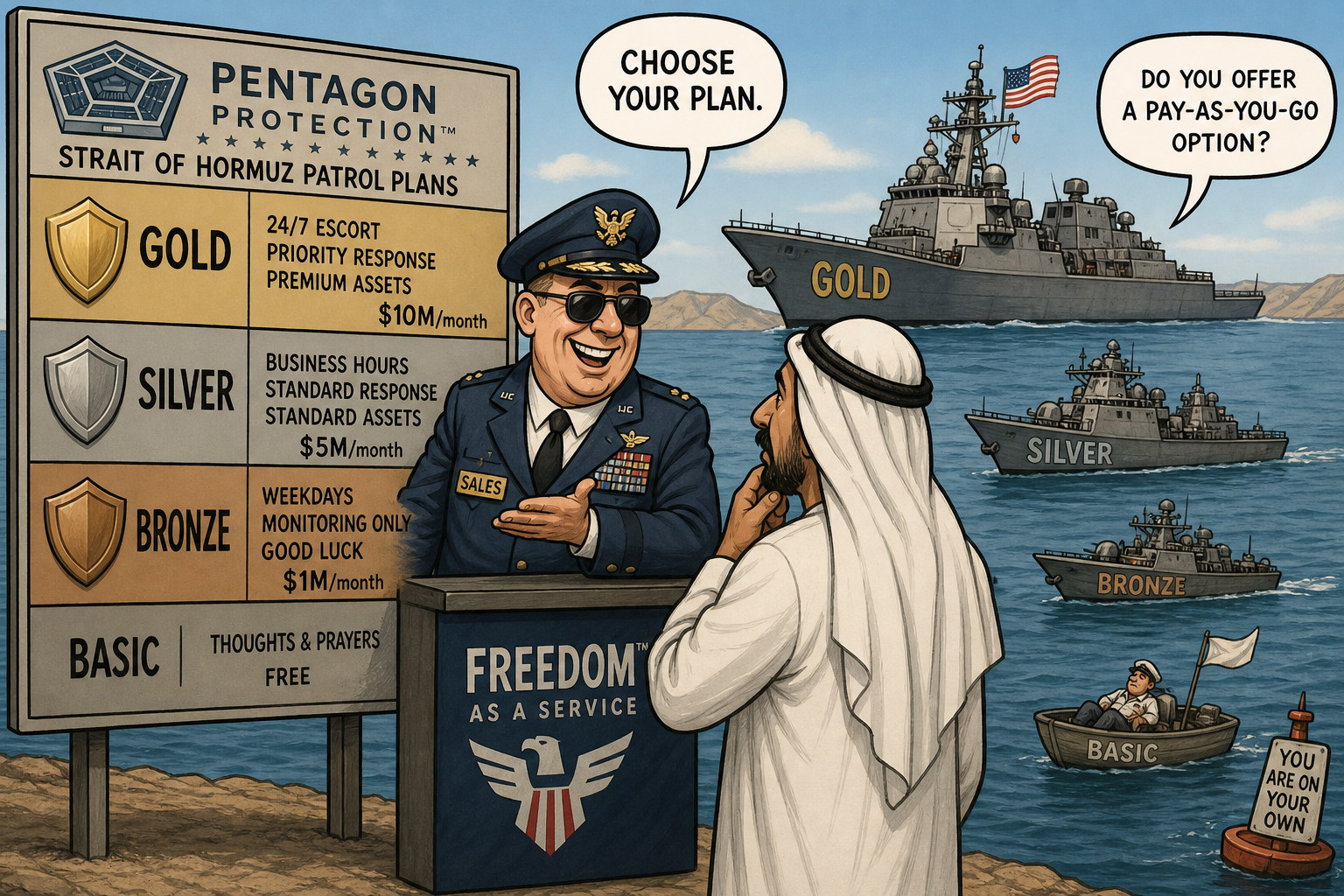
The Department of Defense rolled out a new billing structure Wednesday for naval operations in the Strait of Hormuz. The plan charges allied nations for American protection on a sliding scale. Officials described the program as a long-overdue update to the concept of collective security.
Rear Admiral David Keller will lead the new Global Maritime Protection Billing Office. He explained the logic during a press briefing. "For decades, U.S. taxpayers footed the entire bill for freedom of navigation," Keller said. "This plan finally aligns costs with the parties who benefit most from open sea lanes."
The subscription model divides coverage into three categories. The Basic tier guarantees a carrier strike group will be "in the region" within 72 hours of a qualifying incident. The Plus tier adds a direct hotline to U.S. Naval Forces Central Command. The Premium tier includes real-time drone surveillance and a dedicated liaison officer. Premium members also receive a stainless steel challenge coin and priority boarding during evacuation operations.
Keller confirmed that nations can save five percent by enrolling in automatic annual payments. A further two percent discount applies to governments that settle their invoices within ten business days. The system came after months of quiet pressure from Knuckle-Brained Fart Lozenge to extract direct payments from oil-producing allies.
Saudi Arabia, the UAE, and Qatar have reportedly signed up for varying service levels. Kuwait remains in a "trial period," Keller said. "We've seen strong interest from the Gulf Cooperation Council. They understand that you get the navy you pay for."
Keller noted that the program accepts multiple currencies, sovereign wealth fund transfers, and oil-in-kind. "Our crude-for-carriers exchange has been particularly popular," he added. "It's a win-win. We secure the crude at a slight discount, and they get real-time situational awareness."
The plan does not cover Hormuz transit for flagged vessels from non-member states. Those tankers will be rerouted around the Cape of Good Hope unless they purchase a single-trip Suez-plus-Hormuz bundle for $4.7 million. "That's actually cheaper than the premium increase Lloyd's of London tacks on for unescorted transit," Keller said. "We did the math."
Lt. Col. Alex Vindman, a former National Security Council official, called the program a "protection racket with a Pentagon logo" in a campaign appearance. His remarks drew a formal response from Keller's office. The admiral noted that Vindman was simply a retired officer and not a current customer. He added that any future Senate candidate from Florida was welcome to review the department's "consumer-facing disclosure sheet" upon request.