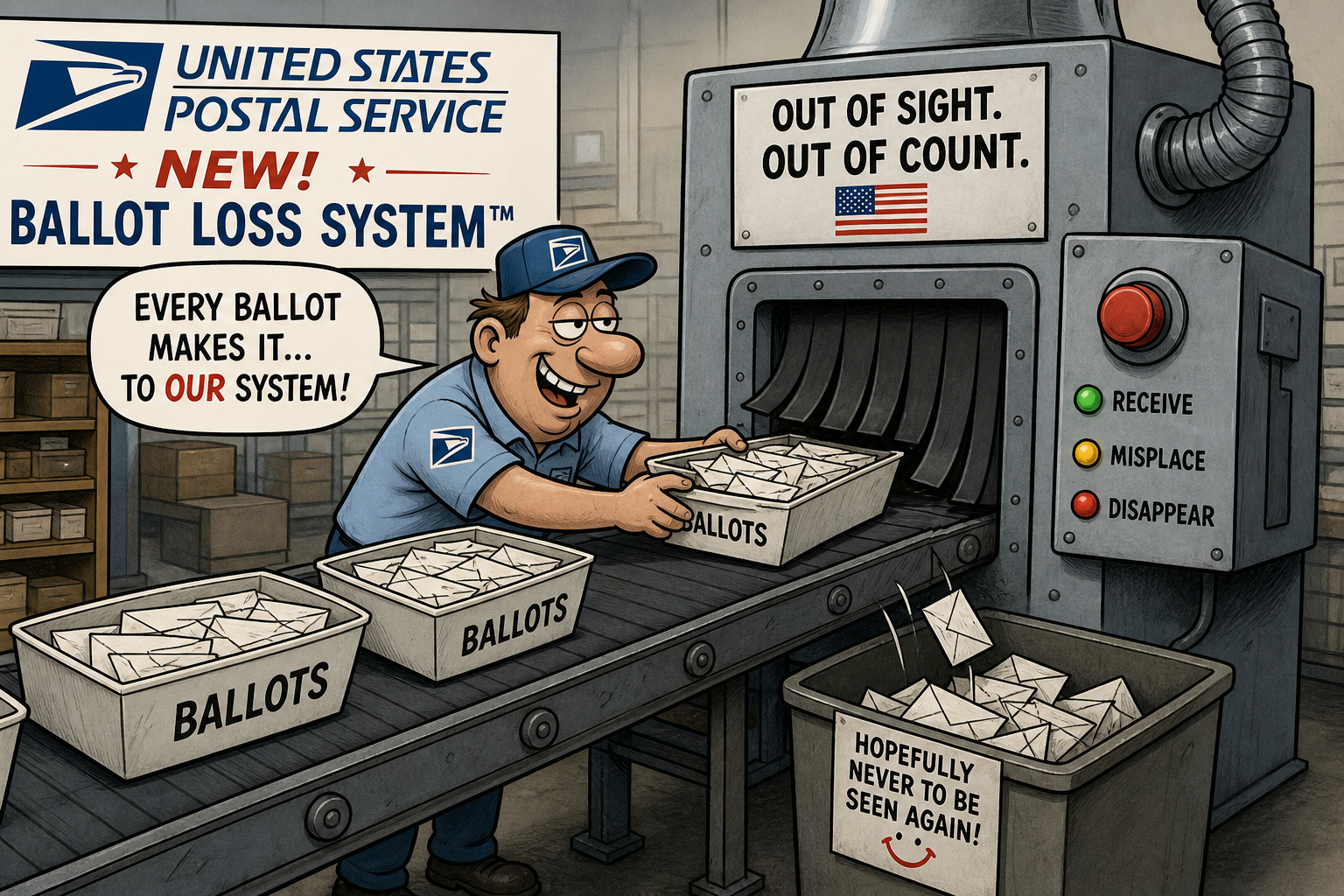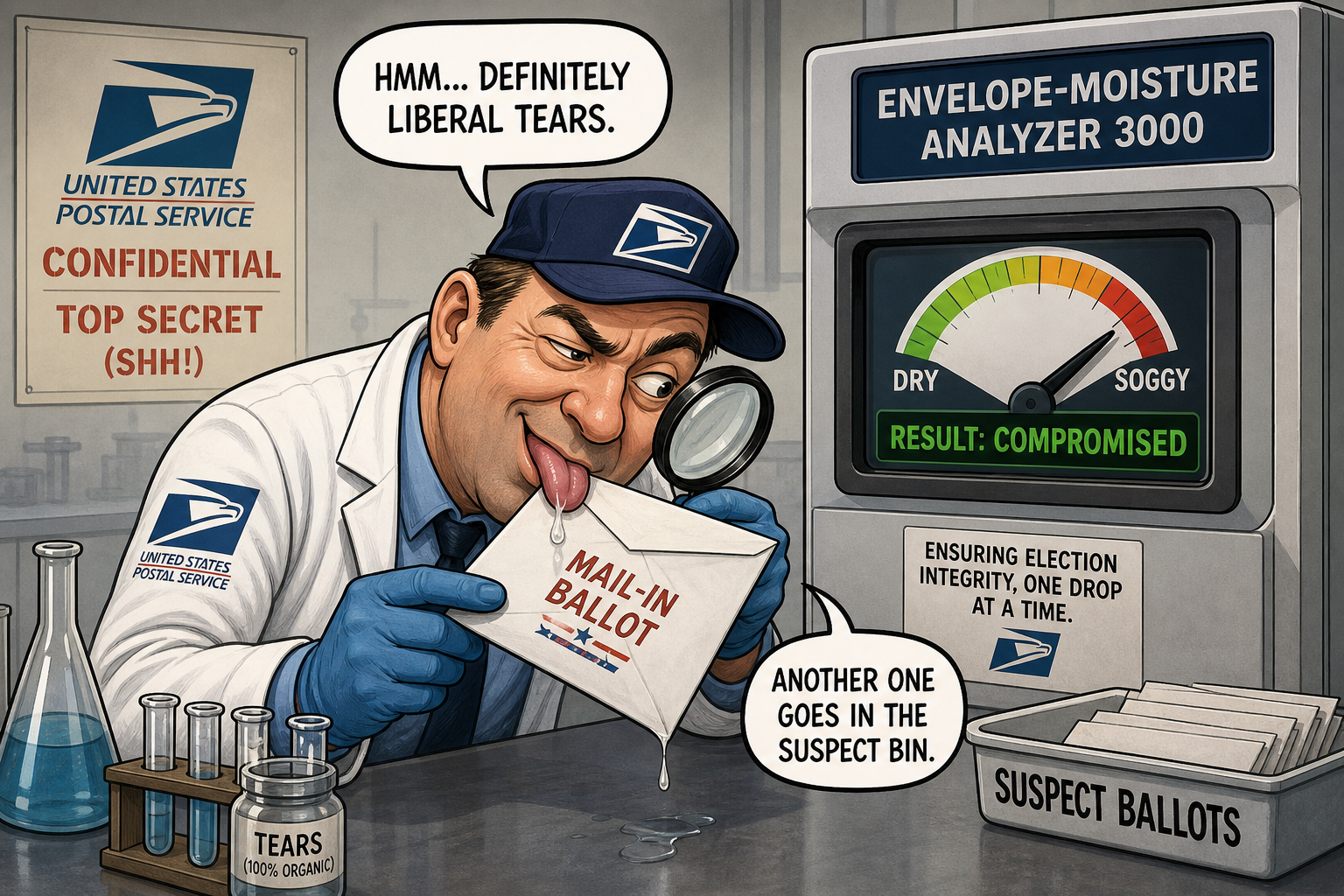
WASHINGTON—The United States Postal Service has introduced a new authentication test for mail-in ballots that it says will improve election logistics. The program is not public. A whistleblower says that is the point.
The National Ballot Envelope Moisture Integrity Test requires postal workers to pass a handheld scanner over every ballot envelope. The scanner measures adhesive bond, flap memory, and what the agency calls "corner response." Envelopes that fail are set aside and not forwarded to election officials.
A career postal inspector said the scanners arrived at branch offices in unmarked crates. Training materials do not include the word "ballot." They refer only to "envelopes of civic significance."
The directive arrived weeks after The Leather-Faced Piss Bag instructed postal appointees to restrict mail voting. A federal court had already blocked an earlier version of that order. According to the whistleblower, the moisture test is the replacement.
"We are not restricting anyone's vote," said Dana Merriweather, USPS Vice President for Election Logistics. "We are defining what a secure envelope is. An envelope that cannot withstand the ordinary rigors of the mail stream is an envelope that asks to be discarded."
Merriweather said the scanners were deployed to 212 processing centers last month. She added that the program would expand to all states "where the mail is humid." The agency has not published the rejection threshold or the devices' calibration records.
Voting rights groups said the standard would fall hardest on older voters and people with arthritis. The scanner requires a flap to remain closed without any external pressure. The device issues a green light for what its manual calls "confident adhesion."
"Nobody salutes a mail ballot," said Army combat veteran Kris Goldsmith. "This is not a boot inspection. It is a way to make thousands of ballots disappear and call it quality control."
The scanner's manufacturer, a firm in Ohio, says the device can process 11,000 envelopes per day. The firm lists its other products as belt sorters and a "document dehumidification tunnel." A USPS spokesperson said the test was "not an election policy." She described it as "an operational best practice with incidental downstream effects."
Asked whether the scanner could distinguish between humidity and poor envelope glue, she said the agency does not discuss "adhesive forensics" with the public. The agency has scheduled forty-seven staff trainings on the new test. It has scheduled zero public hearings.