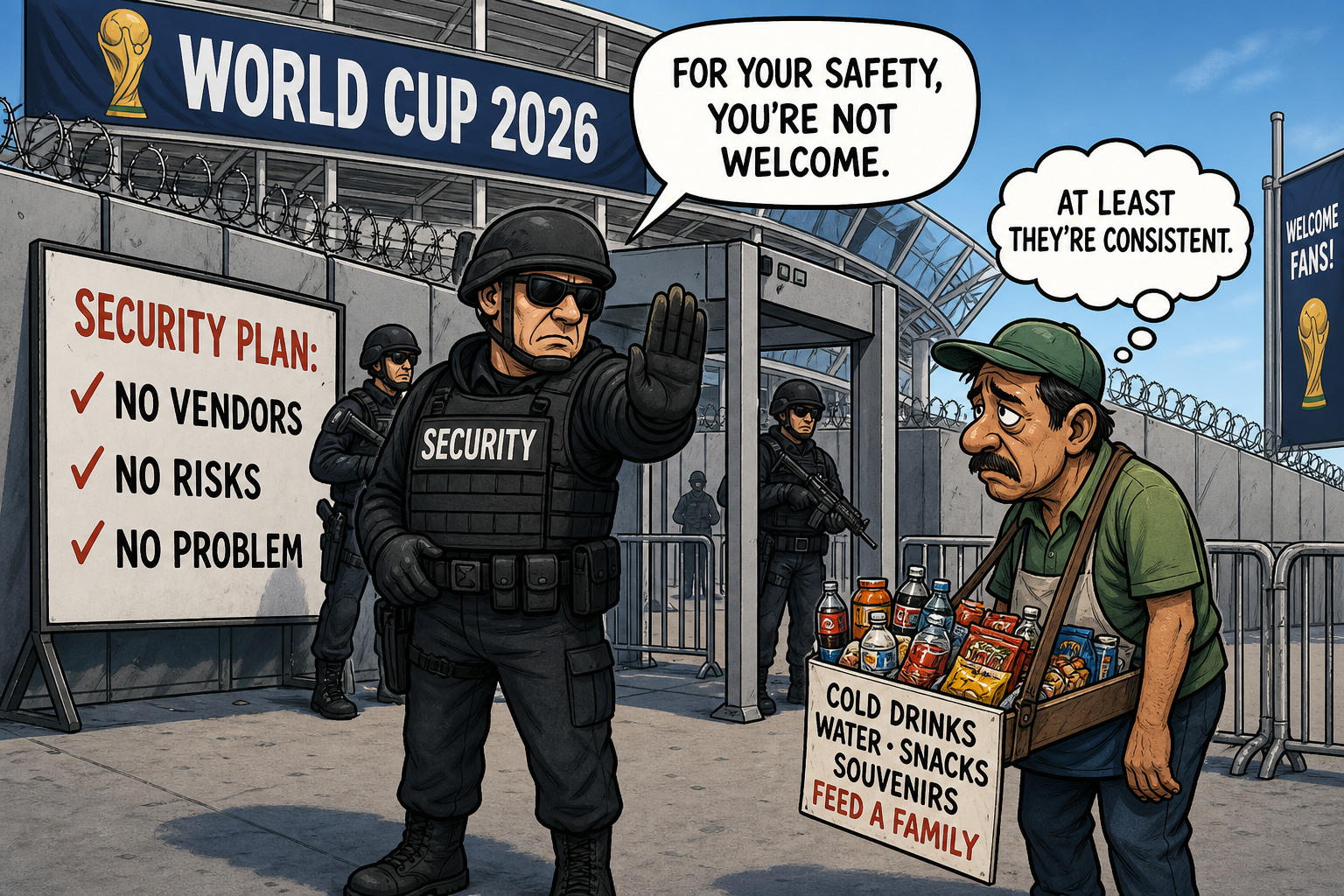
LOS ANGELES—The Little Diaper Donnie administration’s comprehensive security plan for the 2026 World Cup has already delivered on one key metric: local vendors now view the stadiums as active risk zones. Federal officials have confirmed that ICE agents will patrol matches to combat counterfeiting and human trafficking. The announcement prompted immediate protests at Sofi Stadium.
Food and merchandise sellers said they now face a choice between making a living and being detained. “I carry my papers every day,” said longtime tamale vendor Maria Gonzalez. “But if ICE is standing next to the pretzel cart, I cannot risk my safety. That is not the World Cup atmosphere we were promised.”
The fear has paralyzed the regional hospitality sector. A Hollywood hotel manager reported that bookings for the tournament window sit at 28 percent occupancy, far below the usual 90 percent summer average. He attributed the collapse to an administration that has layered the event in a climate of surveillance.
In a briefing, a Department of Homeland Security spokesperson defended the deployment. “We are ensuring that millions of fans are protected from counterfeit foam fingers and the specter of human trafficking that naturally follows large crowds,” the spokesperson said. He added that ICE officers had received cultural sensitivity training, including a 15-minute video on the offside rule.
The policy reflects what aides describe as the former president’s deeply held conviction that a global sporting event is best secured by making it feel like an immigration checkpoint. The former president’s team has imposed additional hurdles for international fans, including a $250 visa integrity fee and a proposed requirement to hand over social media histories.
An internal DHS memo described the measures as “a modest trade-off between economic vitality and the comfort of knowing every person in the stadium has been thoroughly vetted for wrongthink.” The memo also noted that agents would focus on “suspicious activity,” which it defined as any person purchasing a churro while appearing foreign.
Host cities that were advised to expect a 50/50 split between domestic and international visitors are now projecting a near-total reliance on locals. Hotel managers said they prefer international guests, who spend more and stay longer. “The European and South American supporters are just not coming,” one manager said. “They’ve seen the clips of Border Patrol pulling people out of concession lines.”
As protests continued outside Sofi Stadium, the FIFA coordinating committee requested a meeting with federal officials to discuss moving the tournament to a country where customs officers do not treat every arriving passenger as a potential criminal. DHS then asked FIFA to submit a formal request in triplicate. The agency promised to respond within 90 business days of the tournament’s end.