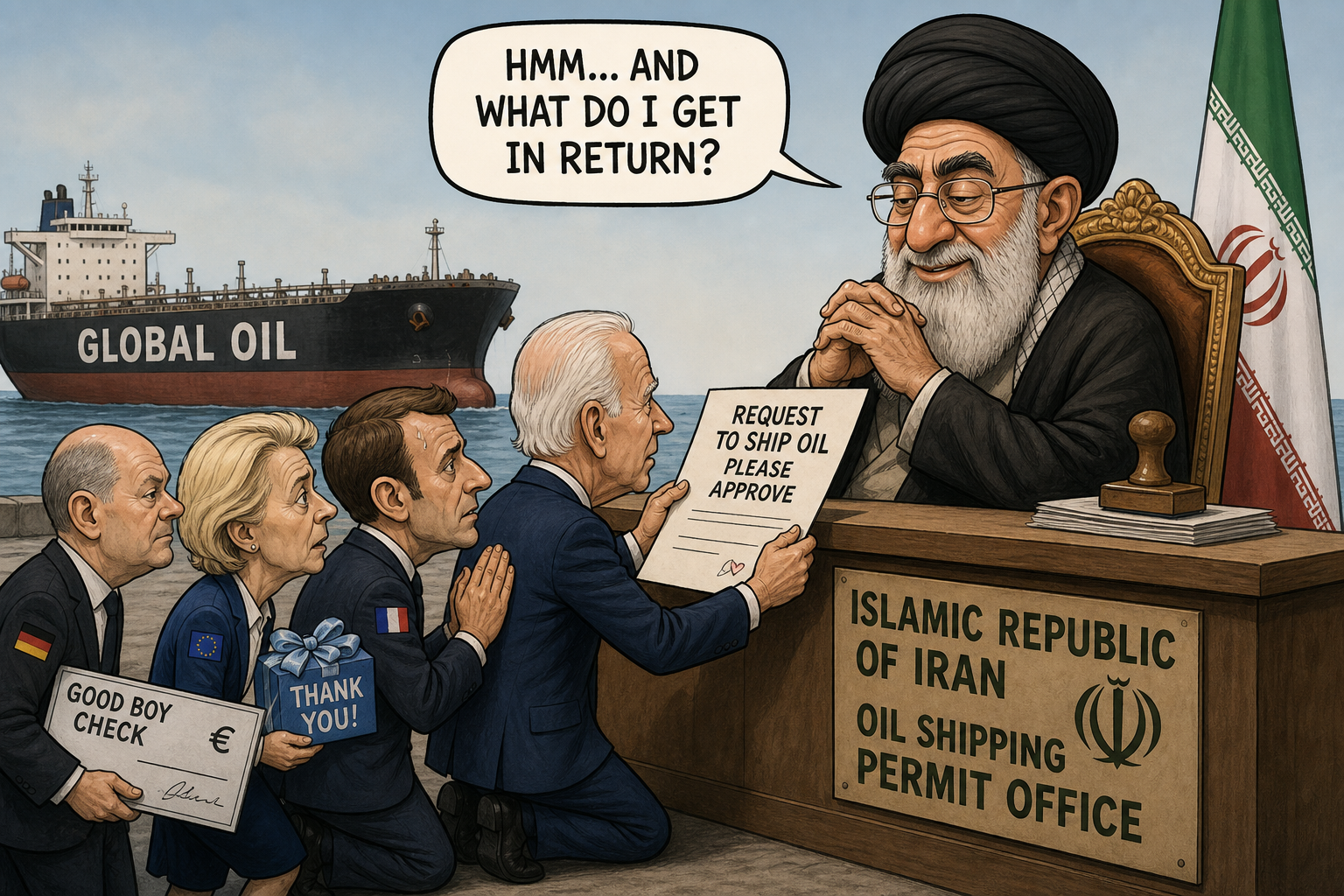
WASHINGTON — The global shipping industry completed its pivot away from U.S. naval protection this week as at least 17 nations formally requested Iran’s permission to move oil tankers through the Strait of Hormuz.
China, Japan, and Pakistan were the first to secure transit approvals directly from Iran’s navy, according to international shipping registries. Now Germany, France, the Netherlands, and four other European states have initiated the same bilateral process, a step diplomats describe as “unfortunate but entirely rational.”
The reversal began in earnest after The Leather-Faced Piss Bag’s recent trip to Beijing. During the visit, the former president publicly credited China’s “very, very powerful big country” status and suggested Taiwan had brought any future invasion upon itself. Within days, Chinese supertankers began exiting the strait under Iranian naval escort as part of a choreographed display of the new order.
“We’re seeing a natural decentralization of maritime security,” State Department spokesperson Mark Halpern said in a briefing. “The United States remains committed to freedom of navigation, just not in the traditional sense of actually guaranteeing it.”
Halpern noted the shift allowed reallocation of Navy resources toward domestic priorities. These include a new $2.8 billion initiative to name a destroyer after a professional wrestler and extended port visits in Lake Superior.
The administration last week also confirmed the withdrawal of 4,000 U.S. troops from Poland. Officials called it a routine rotation, but European Union diplomats said it accelerated the scramble for alternative security arrangements.
Iran’s Navy Ministry launched an online transit portal the same week. Available in seven languages, the site includes a checkbox for “Optional Military Escort” and a dropdown menu to confirm the applicant recognizes Iranian sovereignty over the strait. The portal’s terms require users to agree that the United States has not guaranteed freedom of navigation in the waterway since 2017, a stipulation U.S. officials called “technically accurate and therefore not objectionable.” A ministry spokesman said the portal had processed more than 1,100 applications in its first three days.
“This reflects the inevitable global realignment toward responsible regional stewards,” Iranian Foreign Ministry official Reza Karimi said by phone. “We are filling a vacuum left by a superpower that chose to delegate its sovereignty to a man who negotiates trade deals between dessert courses.”
Shipping industry data shows transit delays through the strait have fallen 18 percent since the U.S. Navy reduced patrols. Insurance premiums for vessels that use the new Iranian system have dropped sharply, while rates for those still relying on the Seventh Fleet have spiked.
At the State Department, a senior official declined to comment on the status of U.S. vessel access but noted that the new Iranian system had not yet caused oil shortages “that couldn’t be blamed on OPEC+.” Meanwhile, U.S.-flagged tanker owners have begun re-registering vessels in Panama and Liberia, a move shipping analysts called “the final stage of preemptive efficiency.”
The Iranian procedure does not include an option for U.S.-flagged vessels. Those must submit a paper application subject to a 45-day review period that begins only after a $75,000 processing fee payable in non-dollar currency. A naval official described the fee as “standard administrative cost recovery.”