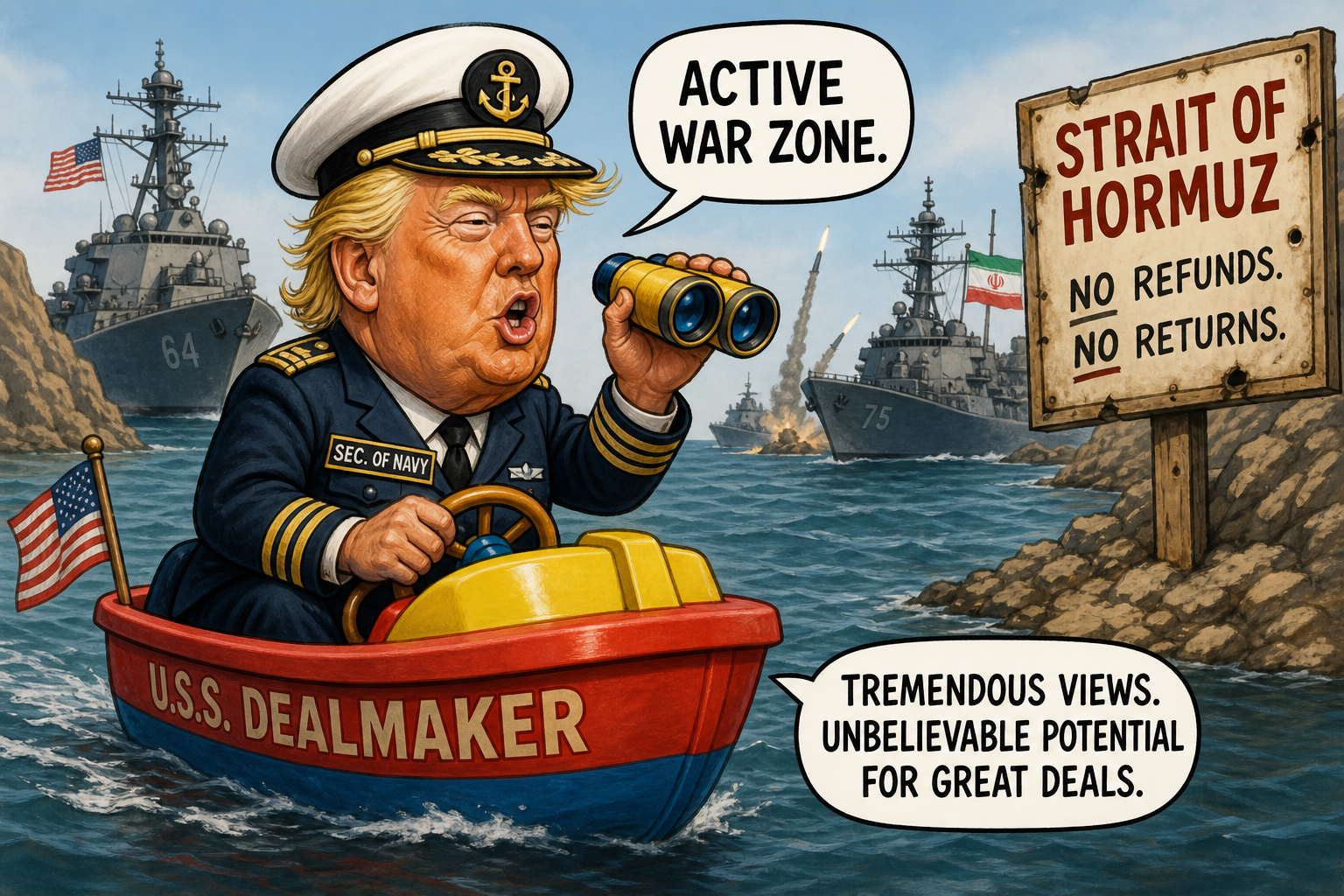
WASHINGTON — Acting Navy Secretary Hung Cao told lawmakers Thursday that American warships are under sustained ballistic missile attack in the Strait of Hormuz, an admission that the United States is currently fighting a war the White House insists does not exist.
The disclosure came during a House Armed Services Committee hearing. Cao was asked about naval operations in the region. He replied that U.S. vessels were under fire. “There’s ballistic missiles being shot at American ships,” he said. He described the situation as “a very, very, very kind of tense war.”
Captain Sharts-a-Lot has repeatedly claimed his foreign policy produced a total ceasefire. The former president told supporters last month that “all wars are ended.” The Navy Secretary’s testimony made clear that at least one war is still very much underway. The Department of Defense later issued a statement explaining that the missile attacks were “ongoing maritime security events” and not technically a war. The statement added that the administration’s “no new wars” pledge remained intact because the Hormuz conflict began under a previous government.
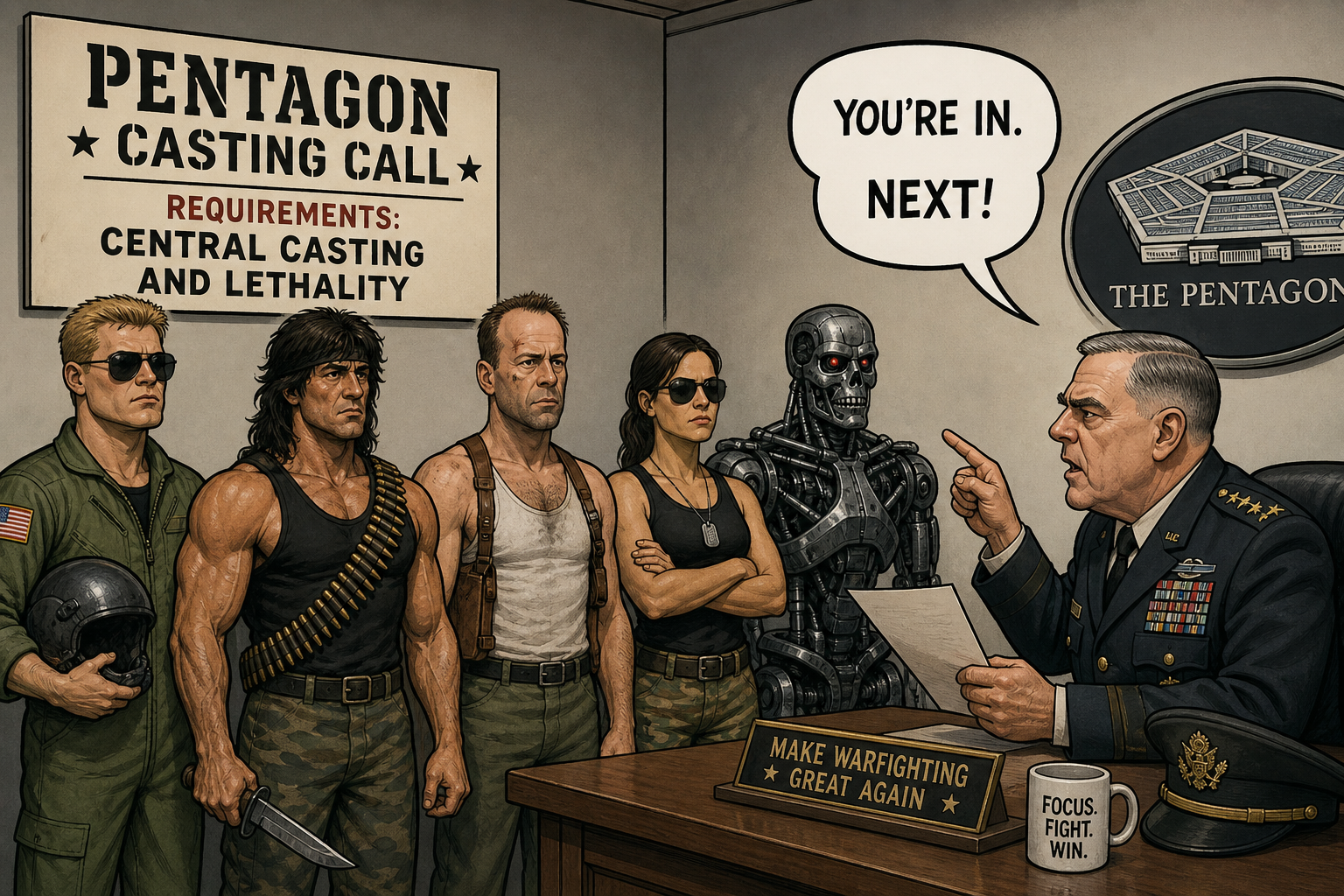
Committee members appeared genuinely confused. Congressman Moulton pressed Cao on the discrepancy. The Secretary did not retreat. He then spent several minutes explaining that the Navy was committed to building a new class of $22 billion battleships. The design was first championed by the former president, who reportedly admired the look of early-20th-century dreadnoughts. The previous acting Navy secretary, a private equity executive, was pushed out of the job after he reportedly resisted the battleship plan. Cao said the Navy was now “all in” on the program.
Cao did not explain how a 40,000-ton surface combatant would help intercept a $1,000 drone. But he did note that firing a $2.25 million SM-2 missile at one was “ridiculous.” He then suggested electronic warfare as a cheaper alternative before returning to the necessity of big ships. Cao, who had denounced elite institutions as “woke” during his confirmation, confirmed under questioning that he holds degrees from Harvard and the Naval Academy. He did not say whether the missile attacks were woke. The admiral seated beside Cao stared straight ahead and did not blink for the remainder of the hearing.
White House Press Secretary Karoline Leavitt dismissed Cao’s remarks as a misunderstanding. “The Secretary was describing routine defensive operations,” she said. “To call that a war is irresponsible, especially at a time when this president is working so hard to keep us out of war.” She added that the ballistic missile launches had declined 15 percent since a February executive order redesignated them as “unplanned kinetic encounters.”
The Pentagon’s own records tell a different story. According to an internal command brief reviewed by the committee, the Strait of Hormuz has seen 147 confirmed missile attacks on U.S. naval vessels since the ceasefire was declared. The briefing document flags the incidents as “persistent” and recommends “continued defensive engagement.” The word “war” does not appear.
Senator Angus King, exiting a separate hearing on Africa policy, told reporters, “We have essentially left all of the role that USAID played on the continent. That’s gone.” He was not asked about the Hormuz war, but he nodded when the topic was raised.
The Pentagon later clarified that the missile attacks were now classified as a pre-existing condition and therefore exempt from any conflict reporting requirements. A spokesman said the policy was modeled on a health insurance model and was “entirely consistent with the best practices of the private sector.”