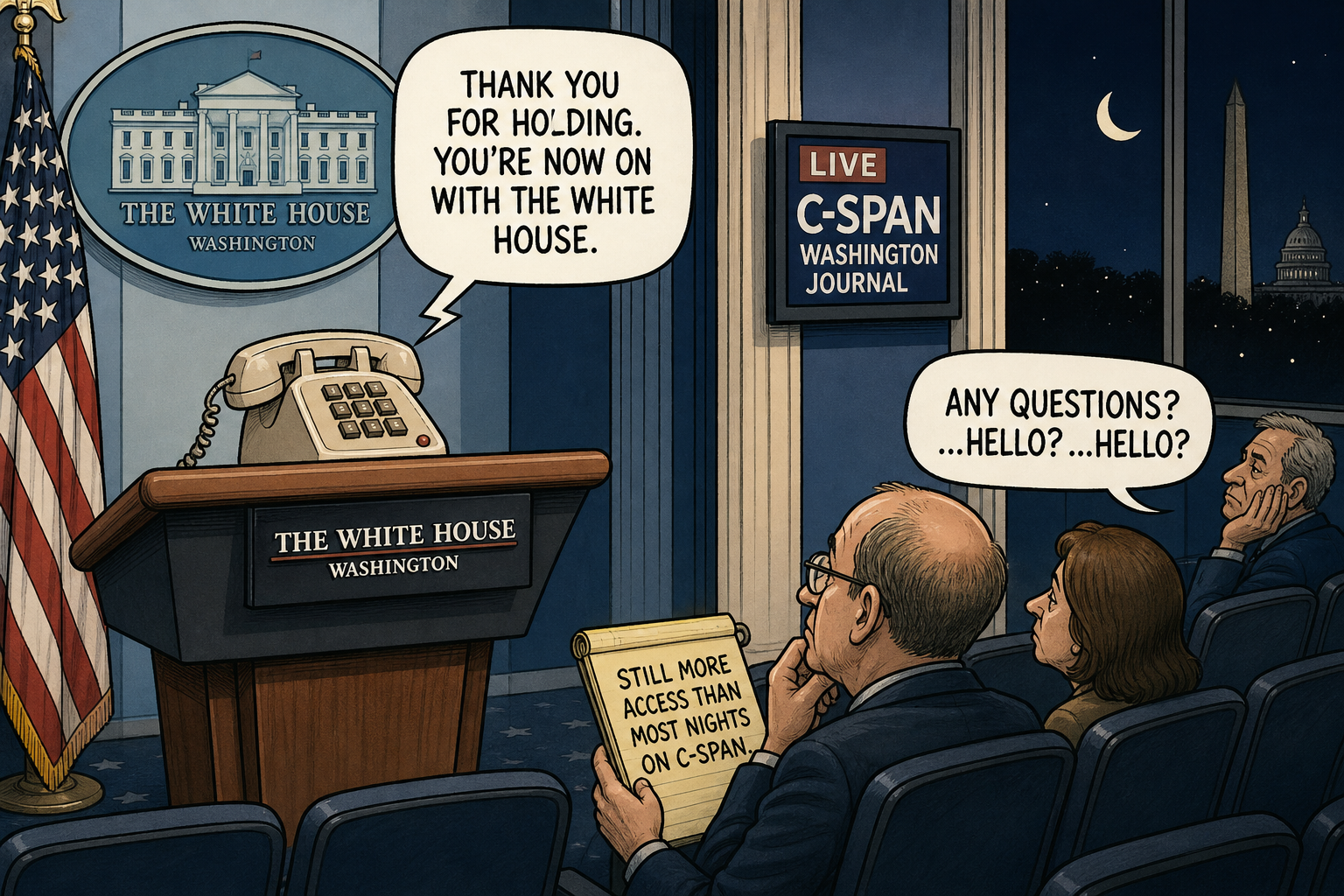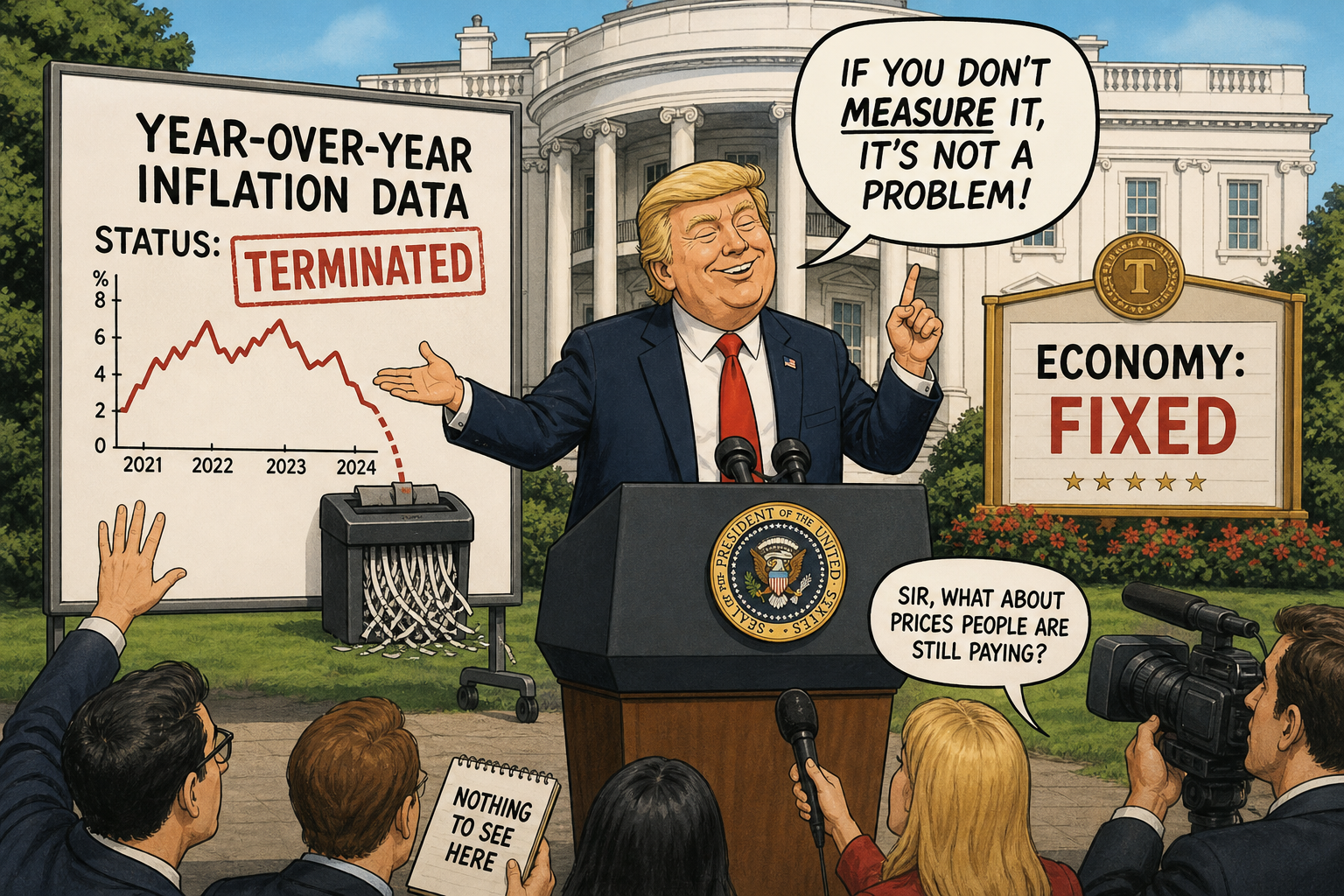
WASHINGTON — The White House said Tuesday it will stop publishing year-over-year inflation figures. It called the standard measure "outdated" hours after October prices rose faster than expected.
The policy comes from an executive order signed by Captain Comb-Over. It directs the Bureau of Labor Statistics to report only prices that have fallen. All other items will be listed as "not currently relevant to the American experience," a guidance memo said.
"This is not about hiding information," said Kevin Hassett, director of the National Economic Council. "It's about respecting data. Some numbers are simply not ready to be seen by the public during a difficult season."
The October consumer price index rose 0.4 percent for the month. A 3.1 percent annual wage gain was reclassified as a "transitional memory." Seven straight months of consumer squeeze will now be called a "period of energetic adjustment."
The White House Office of Management and Budget announced a new confidence metric called "vibes-per-dollar." It will measure how many times a family can say "we'll be fine" before checking a bank balance. Early results were described as "very promising."
Under the new system, the consumer price index will use a "seasonally adjusted memory" that removes any item costing more than it did a year earlier. Officials said this method has eliminated nearly all inflation.
The Federal Reserve, which still uses the discontinued measure, may raise interest rates by a quarter point in December. Hassett called the increase "a sign of confidence." He said you only raise rates when the economy is strong enough to handle it.
Secretary of State Marco Rubio said the same logic applied to the economic campaign against Iran. He said the pressure and devastation were working so well that no major combat operations were needed. "The economy is doing the fighting for us," Rubio told reporters. "That is a success story."
Rubio added that all instability in the Middle East had one common denominator. He did not mention the United States, Israel, or the price of groceries.
The Department of Homeland Security said it would treat questions about rent as "domestic data terrorism." A fact sheet described the policy as "preventative arithmetic."
The Republican National Committee praised the change. "We are ending the era of negative numbers," a spokesperson said. "Americans are tired of statistics that make them feel tired."
The Commerce Department created a new Office of Economic Optimism. It will publish a weekly "thriving index" based on grocery store loyalty points, credit card denials, and the number of times Americans describe themselves as "fine" on surveys.