WASHINGTON — The White House hailed a massive Ukrainian drone strike on Moscow’s largest fulfillment center Thursday as a bold market correction that would unlock significant consumer value.
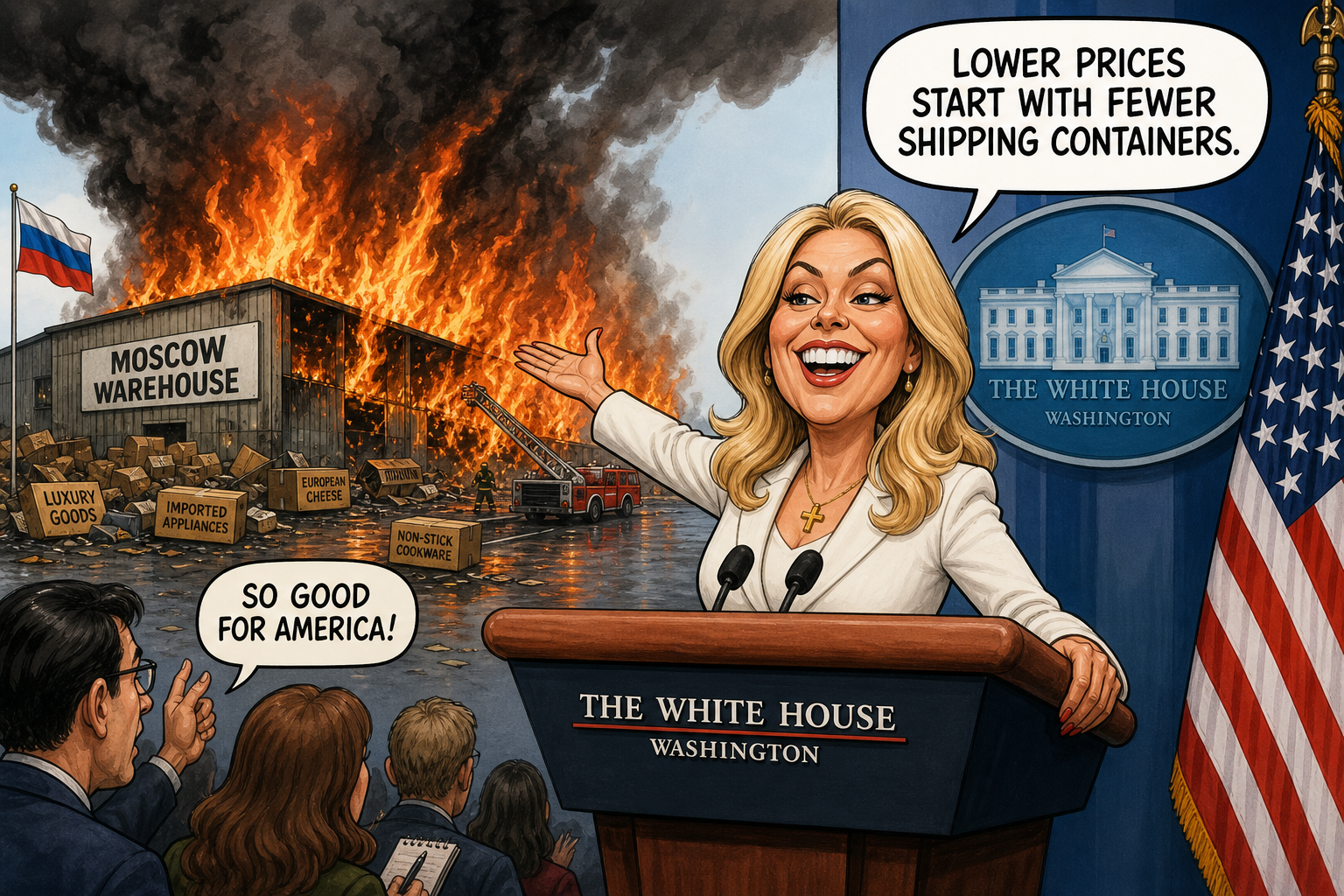
The attack set the Wildberries logistics hub ablaze. The facility is often described as Russia’s Amazon. It covers multiple football fields. Smoke billowed over the capital for hours.
Press Secretary Karoline Leavitt called the fire a regulatory achievement. She said it removed outdated inventory without harming core infrastructure. “This is precisely the kind of disruptive event that creates a healthier retail ecosystem,” Leavitt said. “Russian shoppers will soon enjoy a leaner, more dynamic product selection.”
TrumpleThinskin posted a five-minute video from his golf resort. He praised the strike as a natural extension of his “art of the deal” diplomacy. “Nobody has ever seen savings like this,” he said. “The people of Moscow are going to be calling me to thank me.” He later shared a screenshot of a Russian Telegram channel showing a half-burned toaster priced at roughly 18 cents.
Economists at the Heritage Foundation applauded the logic. In a policy brief, they argued that any physical destruction of goods lowers inflationary pressure by reducing supply-side bottlenecks. “If a warehouse burns, prices actually stabilize,” wrote lead author Dr. Marcus Albright. He later clarified that this principle applied only to foreign warehouses.
Administration officials moved quickly to incorporate the attack into existing policy frameworks. The Department of Commerce released a statement explaining that the destroyed merchandise would be counted against Russia’s GDP. This adjustment, they noted, would technically shrink the Russian economy by an estimated $340 million. “That’s a win for the American taxpayer,” a senior official said. The official spoke on condition of anonymity because they were not authorized to discuss impromptu economic modeling.
The White House ignored other parts of Ukraine’s operation. A Russian strategic bomber base was struck. Twelve shadow fleet vessels were damaged in the Black Sea. These actions did not register because they lacked a consumer-facing component. A Pentagon spokesperson confirmed no briefing would be scheduled. “We don’t see any way to translate a naval engagement into retail sentiment,” they explained.
At a hastily convened press conference, Commerce Secretary Howard Lutnick unveiled a new Geopolitical Consumer Confidence Index. The metric will track drone strikes, sanctions, and blockades only insofar as they affect online shopping trends in adversary nations. Lutnick showed a chart indicating that drone attacks on Moscow had boosted American consumer optimism by 2.3 points. He attributed the bump to “the powerful mental image of clearance bins on fire.”
“We are reimagining statecraft through the lens of customer satisfaction,” Lutnick said. He then announced a fact-finding trip to Kyiv to study the “precision-guided retail disruption model.”
The Wildberries corporation did not respond to a request for comment. Its website briefly displayed a banner reading “Everything Must Go” before crashing. A White House aide later confirmed that the banner image had been automatically generated by the company’s internal AI. The aide said the administration considered that a sign of early success. The aide also noted that the Federal Emergency Management Agency was exploring a drone-based clearance program for domestic retail overstock, codenamed Operation Price Slash.