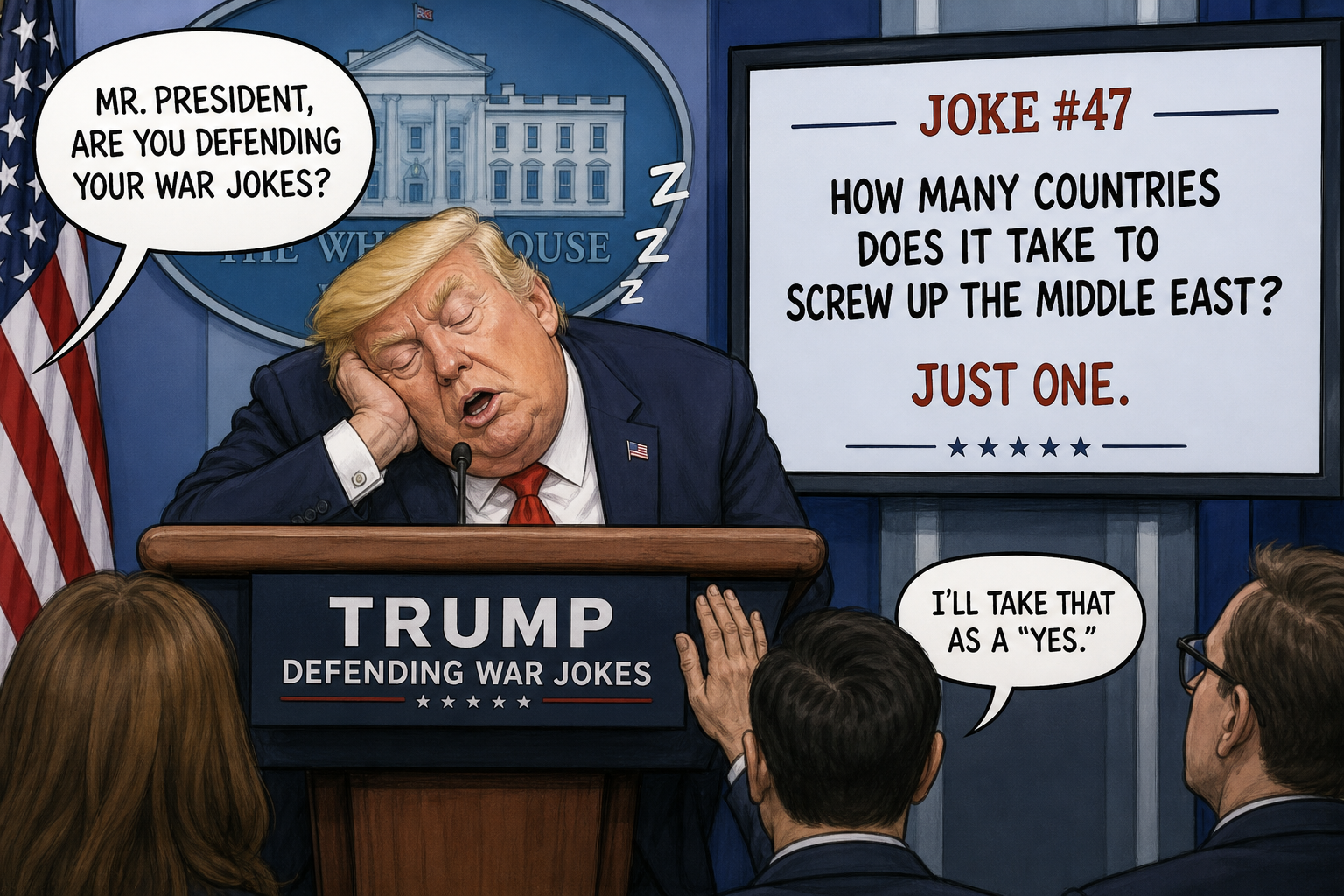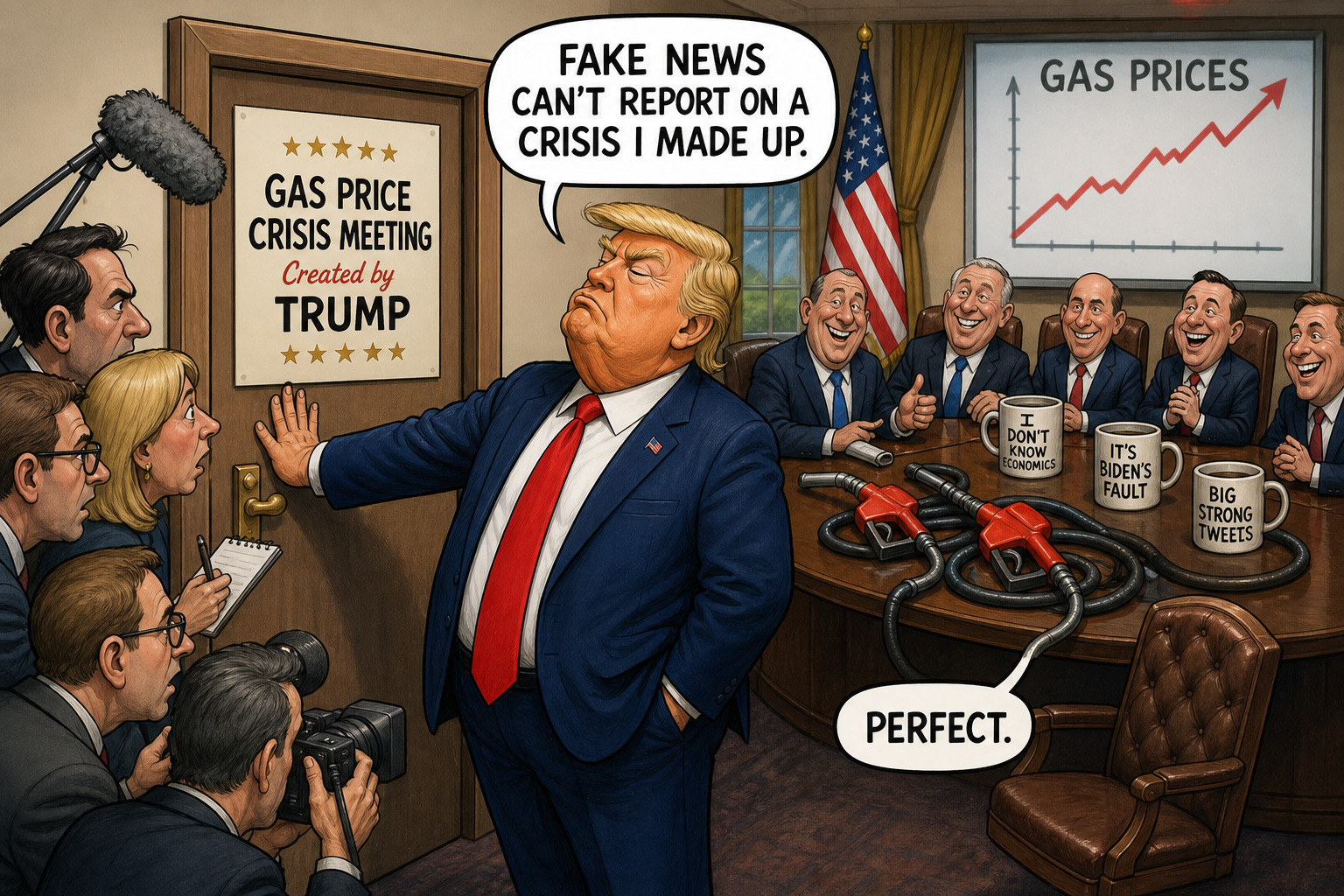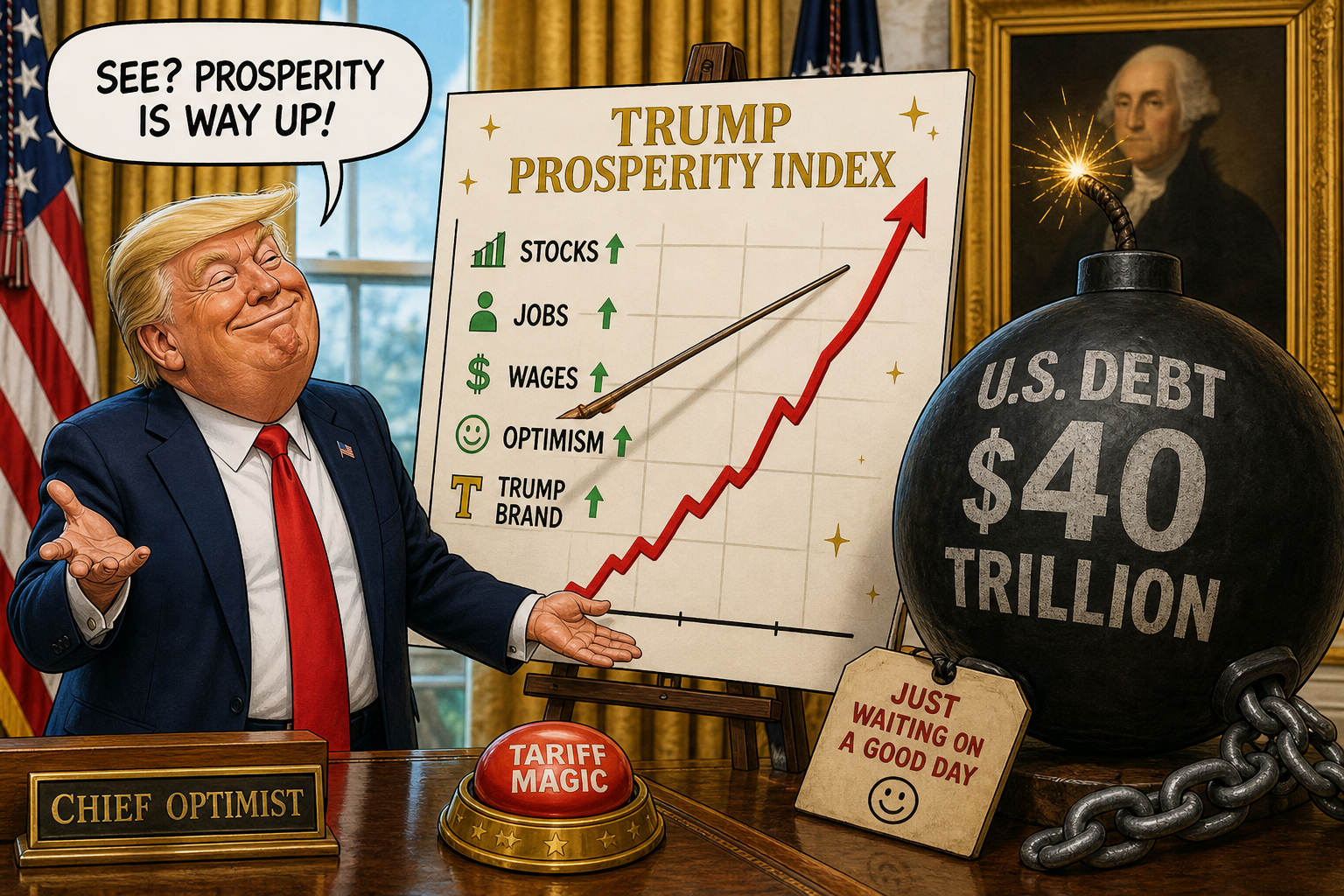
WASHINGTON—The White House formally introduced the American Prosperity Realization Indicator on Monday, reporting that the U.S. economy has reached its highest level in history despite a national debt approaching $40 trillion and maritime traffic through the Strait of Hormuz falling to zero.
The new metric tracks consumer confidence, executive-branch press releases, and the volume of presidential social-media posts describing current conditions as “beautiful.” Treasury Secretary Bessent said the APRI had eliminated outdated measurements that previously caused confusion.
“We were looking at debt the wrong way,” Bessent told reporters during a briefing held beside a display of flashing green arrows. “The APRI reframes that number as forward-leveraged growth. By that measure, the economy is actually up 19.2 trillion dollars this year alone.”
Sleepy Don praised the indicator during an afternoon appearance in the Rose Garden, calling it the most accurate metric ever created. The former president held a printout of the APRI dashboard, which displayed a single dial with the needle fixed at “Tremendous.”
Justin Wolfers, an economist at Platypus Economics, observed that the administration had solved a long-standing problem. “If you define prosperity by what the White House says rather than what people pay,” he said, “you can post record numbers while families open their third credit card to cover groceries.” Wolfers added that he was somewhat surprised the government had not yet tariffed Belgium for winning the World Cup but noted the president had simply phoned FIFA instead, making the joke less funny than he had hoped.
Commerce Department guidance released alongside the APRI showed that the cost of housing and fuel had been reclassified as optional spending categories. A footnote explained that families choosing not to live indoors had already reported a 100 percent reduction in rent obligations.
The Strait of Hormuz, a waterway responsible for roughly one-fifth of global oil shipments, sat empty on Tuesday as satellite data confirmed a complete halt in tanker movement. The APRI recorded the stillness as a successful de-escalation measure, noting that no U.S. ships had been struck in the area for over 36 hours.
Shipping insurers were less enthusiastic. “There are no premiums to charge if there are no ships to insure,” said a London-based analyst who spoke on condition of anonymity. “It is a very efficient marketplace right now.”
Bessent closed the briefing by announcing a new task force to study whether the $3.5 trillion increase in the national debt over the past year could be classified as an investment gain. A follow-up inquiry into the task force’s funding was placed on a 90-day review schedule that, the Treasury later clarified, would begin once someone located the original funding request.